It's Time To Leave Microsoft

Contrary to what you might believe from the title, this article isn't published to try to convince you to leave Microsoft (although, if you are still on the fence, please continue reading the section below); instead of providing you with a paralyzing amount of dystopian information that is already available online, I mainly aim to give you concrete, actionable steps here so you can leave Microsoft and all of its products behind, once and for all.
Before we continue:
"What about this company? How about that organization? Why not write about this clown show? There's no ethical consump…"
This isn't a Q&A; write your own blog post.
If it makes you happy
It can't be that bad
Following is a small selection of what Microsoft has been up to in the past five years.
If you needed more convincing about the banality of technofeudalist evil.
 No Azure For Apartheid
 Julie Bort
 Harry Davies


And we haven't even started talking about the consequences of the Activision-Blizzard acquisition or the human cost of OpenAI nor its effects on society.
GitHub
I have been using GitHub actively since 2014. I have (had) so many repositories on it used GitHub Pages as my personal website. In addition to some of my portfolio projects I built, I took advantage of the GitHub Education Pack several times as an academic, I contributed to countless codebases apart from my own, I was included in the Arctic Code Vault. My degree of attachment and involvement with this ecosystem are why this was the hardest (and the most time-consuming) switch for me to make, but I finally made it.
As of last month, I stopped using GitHub and am currently still in the process of moving all of my labor out of it.
Now if everything outlined above still isn't enough to convince you that using GitHub isn't in our planet's best interest, please know it is not in your personal interest as well. Despite what Microsoft is continuously claiming or covering up, at this point it is reasonable to believe that they have no regard for your privacy or respect for your work, and they will keep using it for all purposes that fit them.
Of course, I am not the only one leaving; in addition to a myriad of other solo developers and organizations, Gentoo Linux just announced its official migration away from GitHub to Codeberg, citing the increasingly aggressive push to force Copilot onto repositories. But I still see plenty of self-proclaimed leftists, anti-genAI people, human rights activists, and pro-Palestine folks using GitHub as their main service, and I urge you to please reconsider and start somewhere.
Alternatives
We are lucky to live in 2026, when there are many, many alternatives to GitHub as a software developer/coder, but personally, I only saw two options as reliable with long-term permanence and simultaneously addressing my privacy and ethical concerns.
If what you read below isn't up to your preference, please make sure to check out European Alternatives to Github in addition to Tangled, especially if you're an ATProto inclined developer.
Codeberg
First is Codeberg which is run by Codeberg e.V., a non-profit organization based in Berlin, Germany, that hosts everything on servers they control with no tracking, no third-party cookies, and no profiteering.
 Codeberg
Pros
It runs on Forgejo, which is a community-driven fork of Gitea that lives under the umbrella of Codeberg e.V. and is exclusively free software. If you've used GitHub, the interface will feel immediately familiar. Codeberg also offers Codeberg Pages for static site hosting (so yes, there is a replacement for GitHub Pages), and CI/CD through Woodpecker CI.
Cons
Unfortunately, Codeberg gives you very limited space for posting your private repositories (and those are only given to people who already contribute to open source), so if hosting a lot of private/proprietary code is your primary concern, and you would rather not self-host, it's probably the better choice for you to settle on an alternative provider.


Self-Hosted Forgejo
I know, I know, the idea of doing all this work "manually", dealing with research, privacy concerns, and everything else is just SO. MUCH. EFFORT. while already trying to exist and stay sane in a crumbling reality, but I am here to tell you, we can make it easier.
Upon learning about private repository limitations on Codeberg, I quickly realized self-hosting Forgejo (which is basically powering up Codeberg in the background) is a great choice for solo developers/small teams as well as bigger organizations. and also pretty easy to do.
Now, if you are a tech/techy person who is somehow still not too burned out by the idea of putting their own infrastructure together for yet another thing, you might feel better with just paying for a small VPS host or setting up your own local server and installing it there by following one of the guides in the link below.
 forgejo-contrib
Me, on the other hand, being the middle-aged, burned-out developer that I am, went with PikaPods.

As PikaPods gives you 5 USD welcome credit, it is pretty frictionless to just sign up for an account and test it for yourself, as it makes the Forgejo (or Gitea, if that's more your speed) installation and administration pretty trivial.
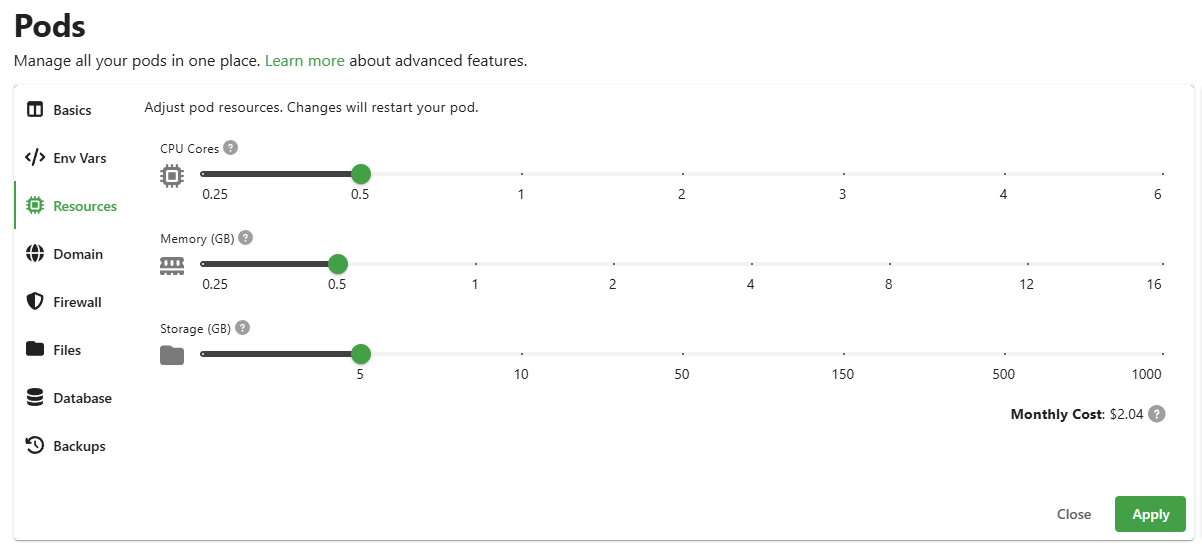
Once you are ready to go (make sure to enable your custom domain before going forward with the initial install, if that's something you want to use, as it is more of a headache to change it later), the rest of the process is pretty similar to what you would do in Codeberg; you can use Git as normal and migrate your repositories there via an easy-to-use UI after creating an access token on GitHub.
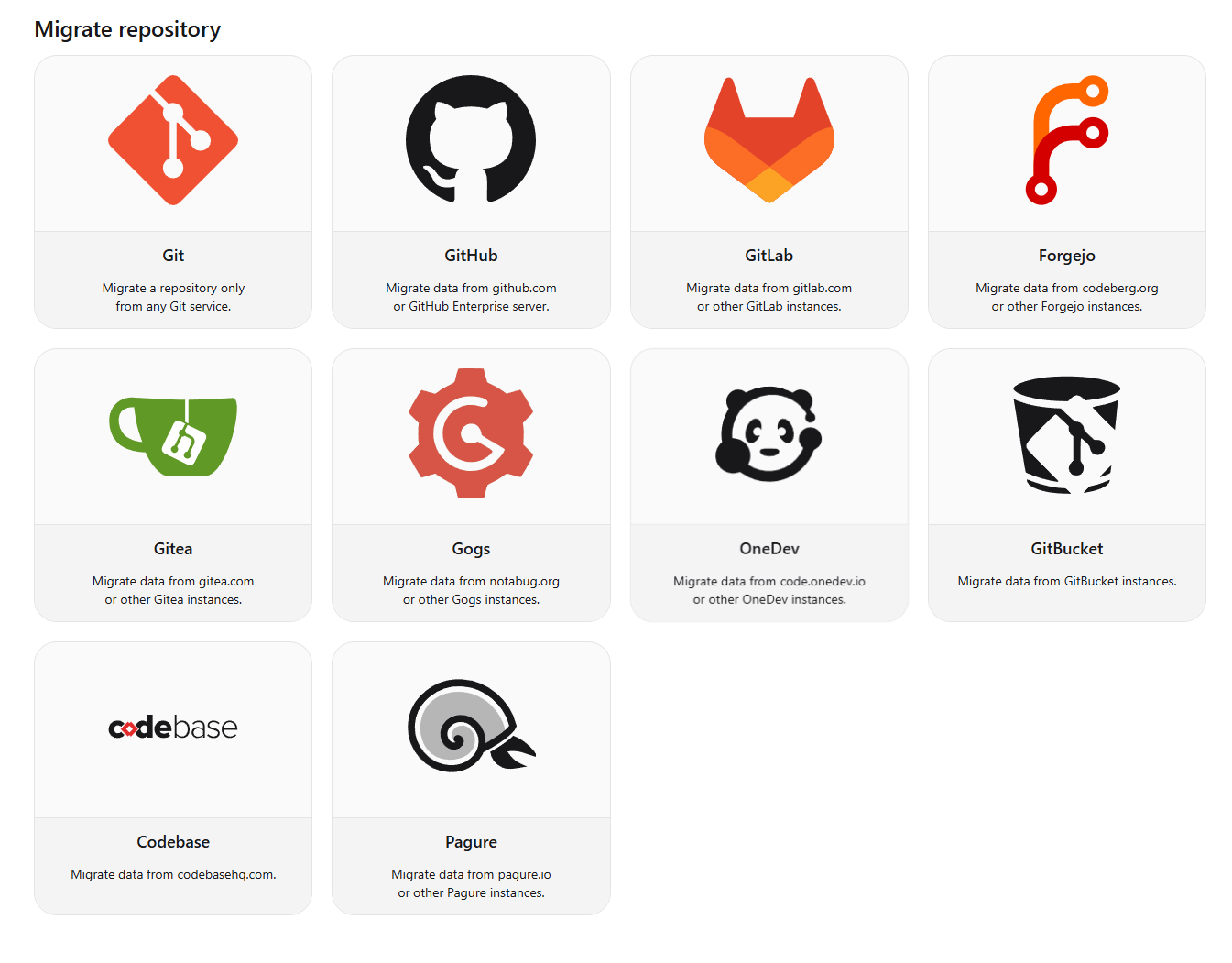
There are, of course, countless ways of doing this. You can automate the migration via personal scripts or follow other tutorials that use additional tooling for the process, just choose the one that fits your workflow and mental model best and go from there.
Visual Studio Code
As someone who mostly wrote code for the web browsers in the past decade, I was a VS Code "power user" in every sense of the word. However, without even going into the ethical concerns of Microsoft products, the nauseating Copilot integration, in addition to serious performance issues (like using four gigabytes of RAM when idle, for starters…) and constantly having to fix some part of IntelliSense or formatting or another editor setting that broke with every update, finally forced me to leave VS Code behind for good.
Enter…


VSCodium is an MIT-licensed binary of VS Code compiled without Microsoft's proprietary telemetry, branding, or marketplace configuration. The resulting binary is released under the MIT license, unlike VS Code's downloadable binary, which ships under a proprietary Microsoft license that states, “The software may collect information about you and your use of the software and send that to Microsoft. You may opt out of many of these scenarios, but not all.”
VS Code collects crash reports, error telemetry, usage patterns, extension activation data, workspace identification via Git remote hashes, and A/B experimentation data, with telemetry defaulting to "all."
Meanwhile, VSCodium disables telemetry at the build level, not just through a settings toggle. The telemetryLevel defaults to off and no telemetry endpoints configured.
Cons
The main functional trade-off is the extension marketplace. VSCodium uses the Open VSX Registry instead of Microsoft's marketplace by default, since Microsoft's terms legally restrict marketplace access to official VS Code products. Open VSX hosts the most popular extensions but is not a complete mirror. But of course you can still manually install .vsix files from Microsoft's marketplace as a workaround, or better yet, follow this tip after every update.
Pros
GitHub Copilot does not work in VSCodium.
Yes, yes, I can also put this under "cons" as well for the "vibe coder"s or professional developers who use tools like Claude daily, but if you're a coder who is still giving money to Anthropic, I feel like leaving Microsoft would be the least of your worries, so I know you are not reading this.
So, I believe this is a net "pro" for so many developers (like me) who were trying to find a way to get rid of the endless whack-o-mole that is Copilot integration on VS Code.
That being said, several other proprietary extensions that won't work include Visual Studio Live Share, C# Dev Kit, and the official Remote Development extensions or Settings Sync, but luckily, reliable community alternatives exist for some (if not most) of these.
What About Visual Studio?
To get it quickly out of the way, my experience with Visual Studio is pretty limited, as I am one of those mythical people who also prefers to use VS Code (VSCodium!) for writing/compiling C/C++; however, I will still put a recommendation here for JetBrains as I know many people and small companies that successfully switched to it from Visual Studio. It is cross-platform and supports essentially the full spread of what you'd use Visual Studio for.
Although if you're using Visual Studio because you work in .NET or C#, you can still use VSCodium as outlined above.
Cons
JetBrains recently unified their products, and there's no longer a separate Community Edition and Ultimate for their IDEs. They're also pushing a subscription model…
Pros
For students and open-source contributors, the full versions are free. It's not Microsoft. It is headquartered in the EU. It has probably the second-biggest community of users after Visual Studio, which makes troubleshooting easier in the long-term.
Xbox Game Pass
Now I am not suggesting one billionaire or a multi-billion-dollar company is better than another, but instead of still paying for a Game Pass subscription fee, if you were to instead get your games from either Itch, Gog, or Steam,
1) You would be saying NO to the further devaluation of video games with this subscription/never own anything you pay for model, which obviously helps XBOX more than anyone else involved.
Cut the middleman and buy it as directly as you can.
Although we are robbed of buying games as hard copies for the most part at this point in cloud capitalism, it doesn't mean you can't buy them from developers directly in some cases (as is the case for Itch), or at least get them from a place that doesn't repeatedly charge you for it each month while profiting from the hard work of actual developers.
2) Do not reward Microsoft even more when they became one of the worst things to happen to the U.S. game development industry since its birth.
3) See above about Microsoft's ongoing collaboration with ICE and the US government and BDS. And there is nothing that will hurt these companies more than withholding your money or your labor from them.
In the current global political climate, where most governments are not only indifferent but are even complicit in labor theft and ethical violations committed by conglomerates like Microsoft, one of the most powerful weapons you have in your arsenal is your money.


And, If You Are A Game Developer
You have power. Please use it.


 Author info BDS National Committee
Windows
Well, to do justice to this section, talking about anything and everything that is broken with Windows right now, I would probably have to write a book. So I'll sum it up (for those of you in the macOS land or already on Linux) why leaving Windows makes not only ethical but also practical sense.
I grew up in the 90s, in a country where having an Apple product was only possible for the 1% (if at all), which means I naturally grew up with Windows and partly Linux, mostly using Windows for the past 25 years due to being an audio professional and a game developer, so I know firsthand how hard, time-consuming, and depleting the transition from one operating system to another could be, especially for people whose livelihood depends on "the computer".
However, Microsoft is definitely making it easier on us these days, given that the only officially supported Windows version right now is probably the worst version in its entire history (Vista haters, OK, I will hear you out later) and that so much unnecessary bloat comes with it, it made switching to Linux less painful for long-time users like me.
 Zac Bowden
So, the good and the bad part of switching to Linux is the amount of options you have.
I can't possibly suggest one distro to all people; what you need will wildly vary depending on your daily workflow, your computer, your patience, and so much more.
But here's a pretty great introductory video (aimed towards game developers, but anyone can get some use out of it) by gamedev extraordinaire Sos Sosowski


Download OpenSUSE to follow along with Sos
For me, Ubuntu Studio made the most sense. As a long-time Ubuntu user and mostly an audio designer/developer, I found the out-of-the-box experience and KDE Plasma really enjoyable and seamless for the most part. If you need to do something on Windows due to a client project or any other reason, you can, of course, still dual-boot to Windows (or, if you have the money, have a spare old computer for it), but more often than not, Wine will probably cover your needs, and you always can set up a virtual machine.
I Am Tired, What Now
The fact that we haven't even gotten to Office, or Teams or Azure or talking to your loved ones about the amount of brain damage they accumulate from constantly using ChatGPT is just a reflection of the scale of the overtly negative effect Microsoft has on the world.
At the end of the day, no one can force you to do anything, nor can they make your decisions for you, but you are not powerless, and you are not desperate for any of these conglomerates that just want to squeeze the last drop out of you and your data to horde further wealth.
Start somewhere, anywhere.
“There is nothing new under the sun, but there are new suns.” - Octavia Butler